
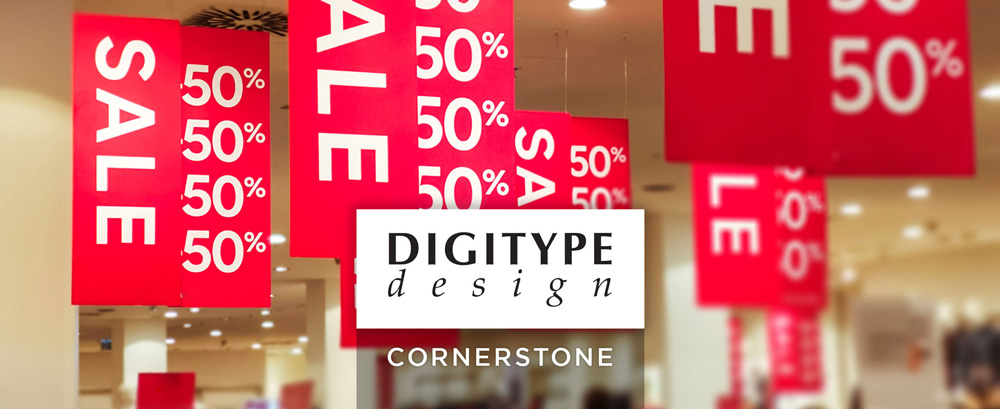
Retail graphics do more than beautify a store. They direct customers through the in-store environment, draw attention to specifics, and communicate future sales or promotions. They can influence how customers view your establishment. The right graphics make a difference. That means subpar outcomes have a negative impact by producing questionable feelings about a retail location. With the popularity of social media and word-of-mouth referrals, one customer’s negative opinion can trickle down quickly, causing damage to your brand.
There are ways to avoid common retail display and graphic missteps. Here is what to look for:
Outdated Graphics
Outdated graphics do more than simply provide customers with incorrect or expired information. They can make the retailer or retail location look bad. There are two types:
❖ Inactive or Temporary Graphics
Many retail stores display seasonal, upcoming sales, or event graphics. If these are not changed out often, customers can get confused about what is active or not.
❖ Fatigued Graphics
Aged, faded, or damaged retail signage displays give off a negative impact and reflect poorly on a store. Replace peeled, broken, dented, torn, or vandalized signage.
Regular graphics updates should be an important part of any retailer’s marketing strategy. If displays are too old, they get “display fatigue,” which is when customers become so familiar with signage, that they do not notice it anymore.
ADA/Accessibility Graphics
ADA-compliant signage, accessibility and inclusivity within retail environments are important for public-facing organizations. Ensure customers with disabilities can comfortably shop at your location with a few simple steps such as:
❖ Retail graphics for visual impairments should have low or no-glare finishes, high-level contrast, accessible font, and characters
❖ Floor graphics to clearly note more accessible routes
❖ Retail signage or displays set at a visible level for those with mobility impairments
Regulations dictate all ADA signage. To get things right, make the investment in working with a professional large-format image company that is familiar with ADA standards.
Integrating QR Codes
In-store or outdoor retail graphics can be informative, but many fail initializing the purchase process. To increase success try building a QR code into signs, displays and POS graphics. It is a long-standing way to continue marketing efforts after the customer is absent from your establishment. Blending the QR code into all marketing communications, builds a path to your brand by offering an independent way for consumers to learn about products or services.
Benefits of using a QR code include:
❖ Lead generation
❖ Tracking customer engagement
❖ Boosting website traffic and/or app downloads
❖ Enhanced customer service communications
❖ Linking in-store and digital marketing
What display types should have a QR code?
❖ In-store retail signage and displays
❖ Outdoor retail graphics or advertisements
❖ Window decals
❖ Floor graphics
❖ Handouts
❖ Sample product information
❖ Packaging or wrapping
There are several reasons that retail establishments should be working with top-level imaging companies for graphics. Initially, large amounts of money are spent on retail graphics each year. If retailers are attempting to handle signage themselves or contract with companies not accustomed to large-format graphics, results may be disappointing and costly. Secondly, professional large-format imaging companies have the experience designing, manufacturing, installing, and maintaining retail signage, all of which improve ROI.