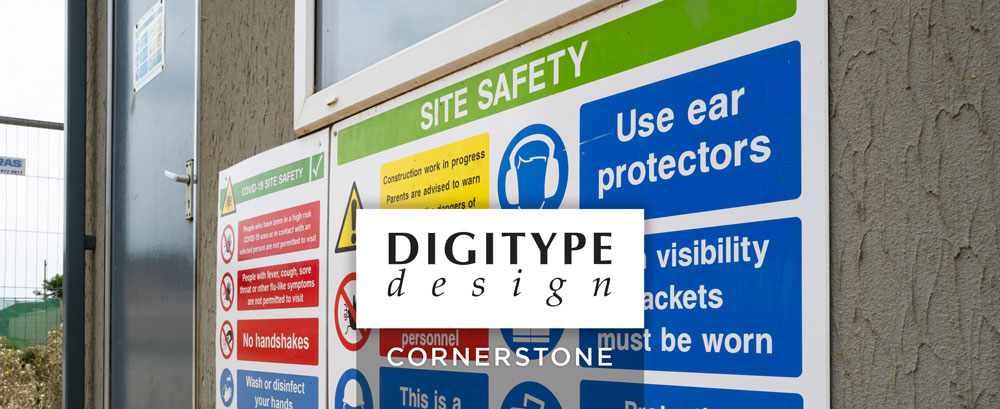
Design Tips and Substrates for Construction Site Signage
Visiting most construction sites, the customary graphics are vital for conveying safety information and directions. Without those important visuals, accident risks become elevated. But there are more benefits to effective project site communications than people realize, including brand building opportunities. Here are a few design tips and a substrate overview to improve construction signage:
All signs are visual cues for information, navigation, safety, regulations, or advertising, so details matter.
Remember:
| ❖ |
Set notifications in prominent locations to clearly communicate relevant details to all entering or moving around project grounds. |
|
| ❖ |
The Occupational Safety and Health Administration (OSHA) has specific safety posting requirements relating to wording, size, and placement. |
|
Safety is priority number one on every job site.
Consistently:
| ❖ |
Use easy-to-read bold text for the best visual impact on any size road and pedestrian traffic warning notices. |
|
| ❖ |
Utilize yellow, orange, and red as preferred primary colors for safety-related alerts. |
|
Wayfinding markers and pronounced directional icons help minimize stress for drivers, employees, and visitors.
Keep in mind:
| ❖ |
These placards guide people through the construction site and may indicate entrances, exits, and vital areas. Place them throughout the site in a logical sequence. |
|
| ❖ |
Design pieces with bold fonts and bright colors on stout materials to handle extreme weather. |
|
Informational graphics apply to a range of considerations like smoking, eating, or off-limits areas.
Make sure to use them for:
| ❖ |
Highlighting emergency exits, assembly points, and contact numbers. |
|
| ❖ |
Work progress indicators, scheduled completion dates, and weather advisories are subjects requiring easy-to-read fonts, structured spacing, and contrasting colors to grab attention. |
|
Specific ADA guidelines for builders, contractors, and job-site managers exist for designing and placing these signs. ADA compliance is required for construction sites, and using braille is common.
It is always a good idea to:
| ❖ |
Make tactile signs with prominent raised text and symbols that are easily read by touch. |
|
| ❖ |
Place signs where they can be reached by those with mobility issues. |
|
Construction site fencing is an area where creativity is key. Whether for privacy or custom messaging, these barriers offer a generous area to reach specific audiences.
Remember:
| ❖ |
Fencing is not only necessary for safety messaging, but a space that can do double duty as a spot to build brand. |
|
| ❖ |
Uniquely display your brand and logo formats to support project design and goals. |
|
| ❖ |
Use finished project renderings so passersby can envision results in context to the locality. |
|
Pay close attention to substrate materials before customizing construction, sign graphics, and messaging. Construction signage is not one-type-fits-all. Location, weather, durability, and life span each play a role in selecting the best material.
Some popular choices are:
| ❖ |
Corrugated plastic is often used for temporary installations. Lightweight and durable, it is typically for directional, event, or pedestrian traffic wayfinding. |
|
| ❖ |
Aluminum is usually for smaller safety or regulation notifications. Aluminum is rigid and long-lasting. |
|
| ❖ |
Polyester fabric is lightweight, hard-wearing, and eco-friendly. Easy cleaning and simple to store or transport are additional benefits. |
|
| ❖ |
Flexible vinyl is a popular choice for banners. It is sturdy, weather resistant, easily installed, and can be custom cut or designed to fit most any space. |
|
| ❖ |
Knit mesh banners are a construction fence advertising staple because they are weather resistant and made of 70 percent vinyl. Wind easily passes through, thereby reducing the risk of fence damage, while supplying a prominent messaging space. |
|
(Digitype Design has published a Large-Format Substrate Guide with physical samples of the most popular substrates. Request your free copy through the Digitype Design website.)
Many construction sites can be loud and confusing, but effective signage takes the guesswork out of the what, where, and when for those working in that environment. To get the most from your notification investments consider teaming up with a large-format imaging company using a consultative approach, advanced production techniques, and solid brand communication methodologies.
|